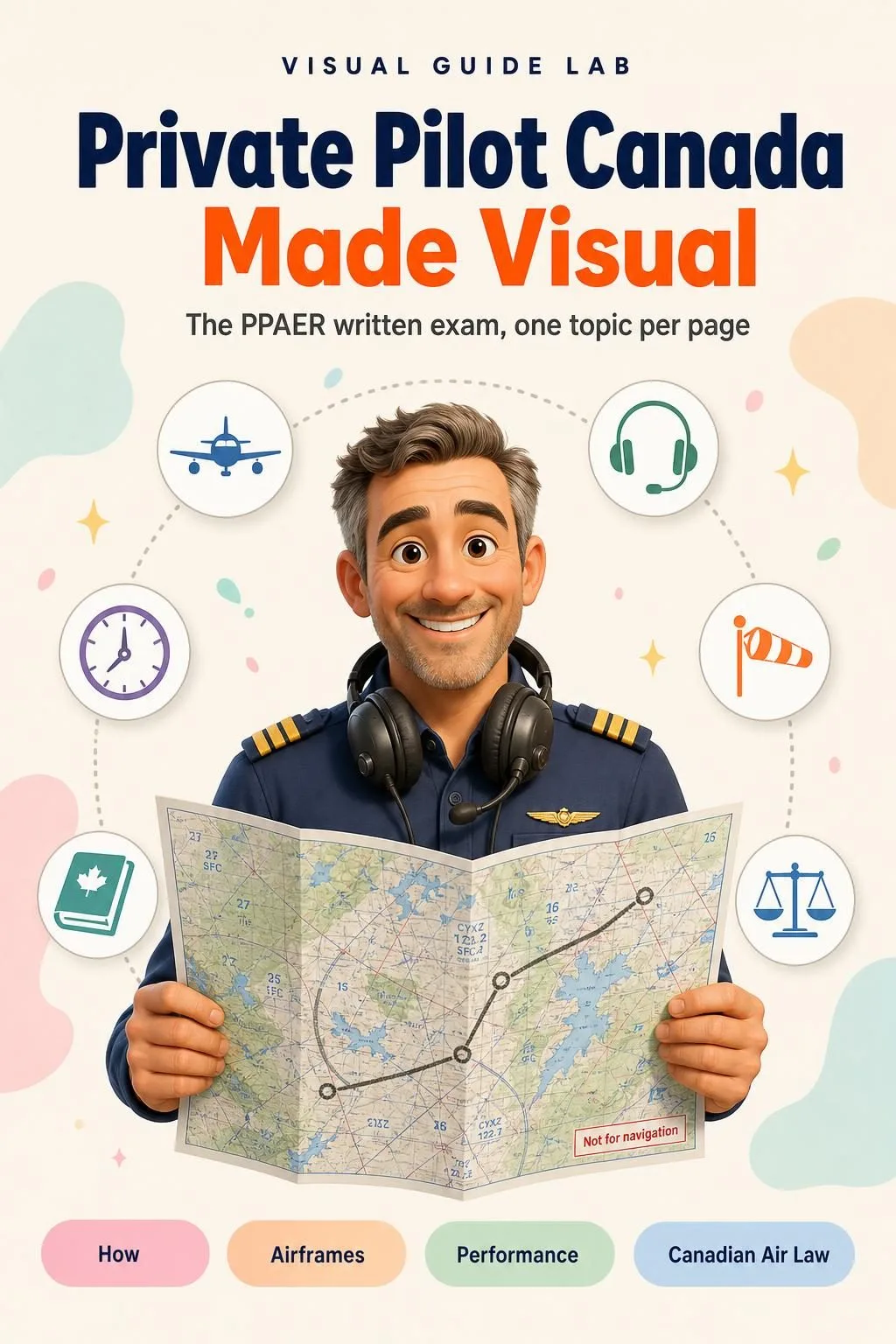
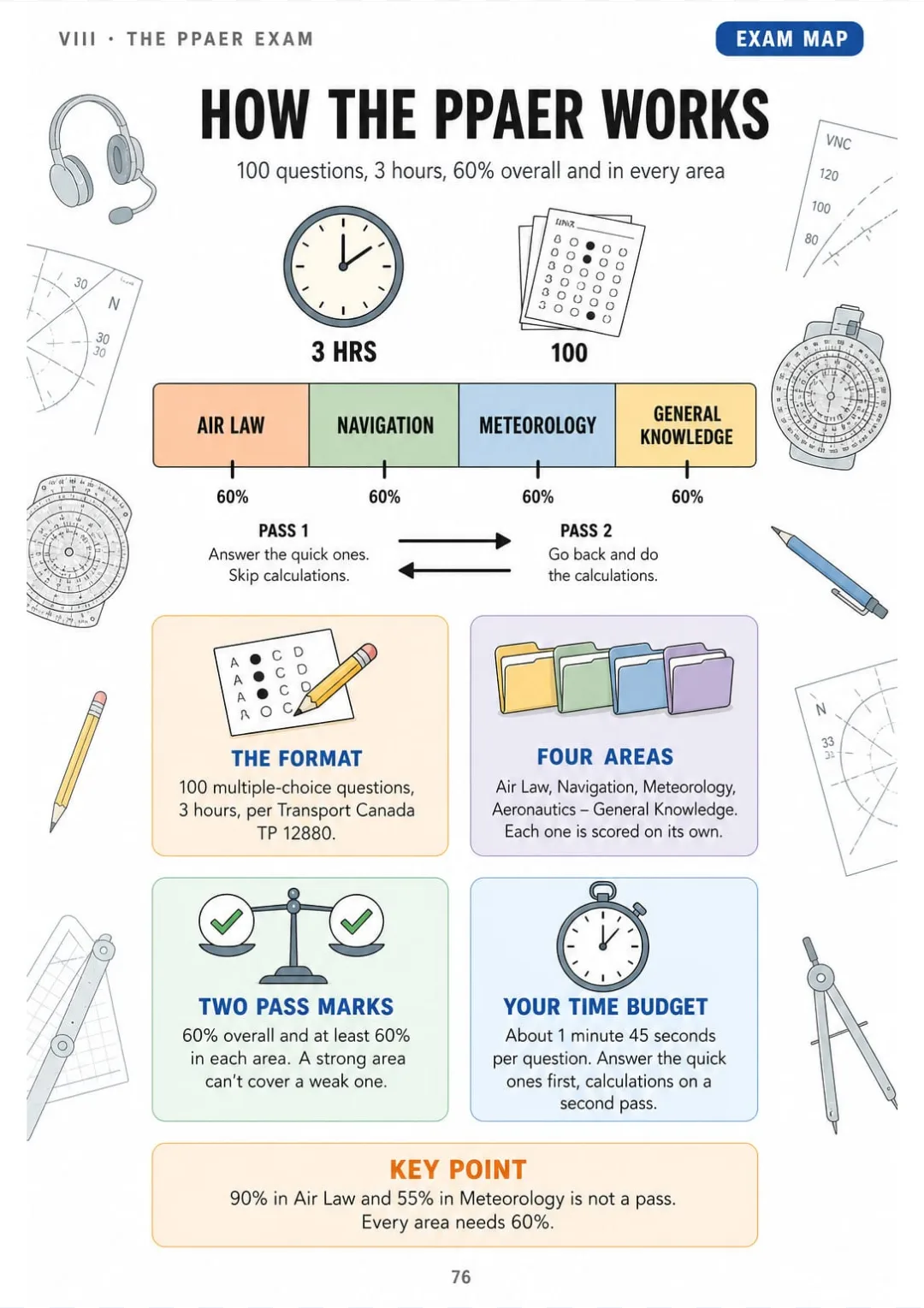
The pitot-static system, density altitude, VFR minima, Classes A to G, the VNC, the METAR, the GFA and the C of G: in your notes it's a wall of text. Here each topic fits on one page, with the drawing and what you need to remember. Canadian rules only: CARs, TC AIM, CFS and NAV CANADA products. No FAA. 79 illustrated pages.
🔒 Secure checkout · PDF by email · 30-day guarantee
One topic per page, the drawing that shows you how it works and the boxes with what you need to know:


Swipe to see more →
These are real pages from the book. The table of contents is the full one: 8 parts and 74 topics.
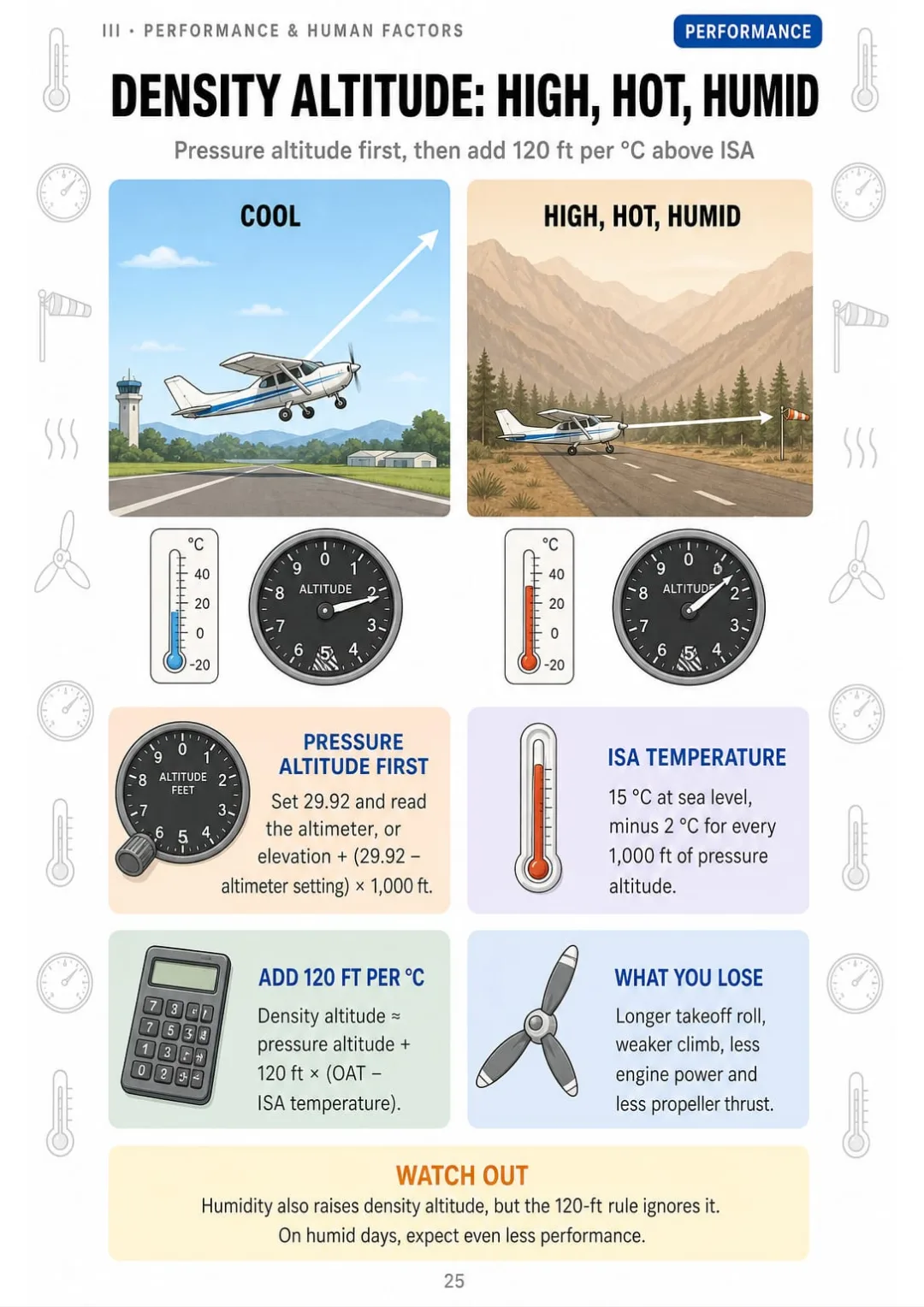
You've read the section on density altitude three times. You close the book...
...and you can't remember whether a hot day makes the plane perform as if it were higher or lower. It was just lines of text, one after another.

Here density altitude is one page: the runway, the thermometer, the three H's (high, hot, humid) and one worked example, a pressure altitude of 2,000 ft at 30 °C turning into a density altitude of about 4,280 ft.
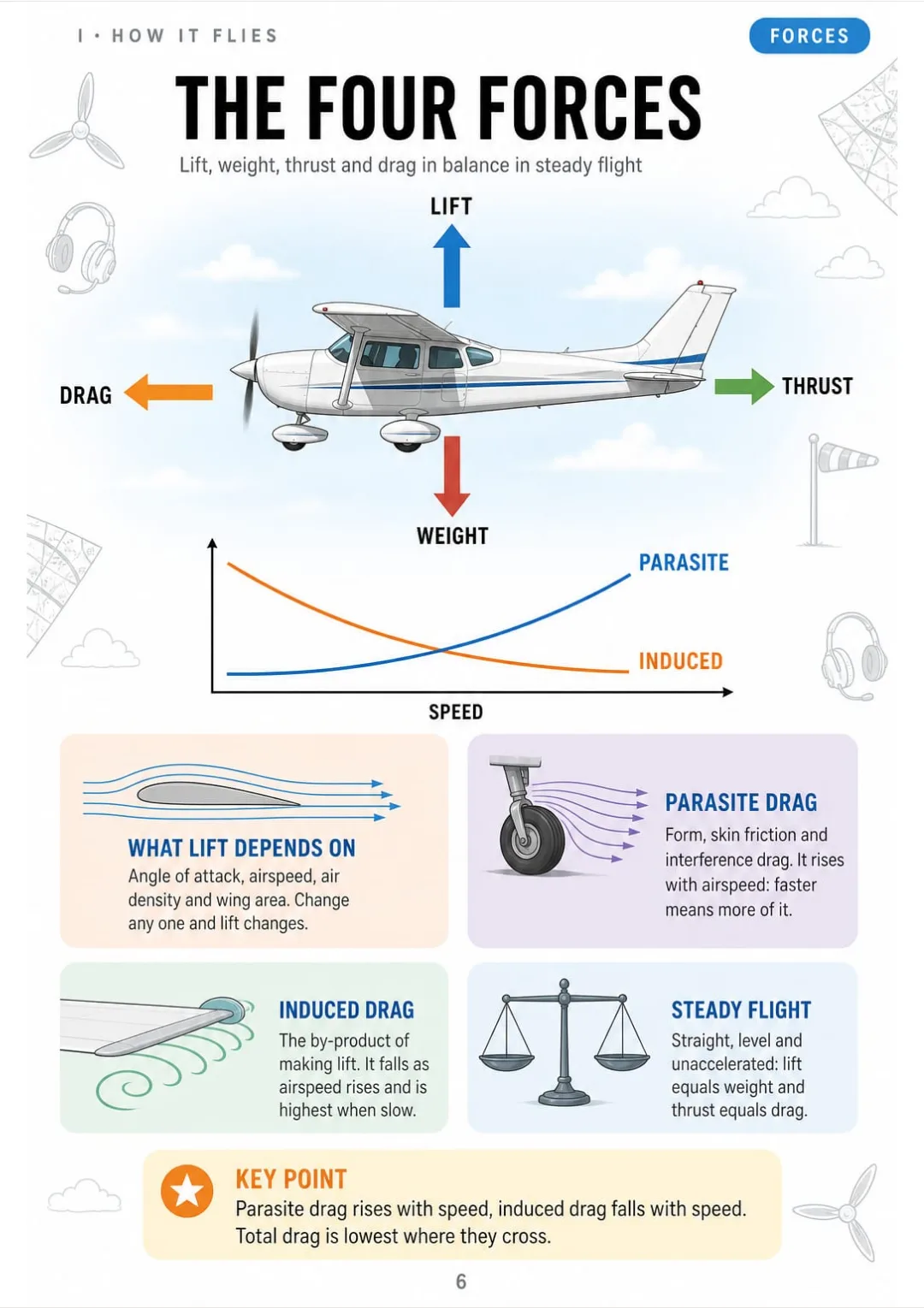
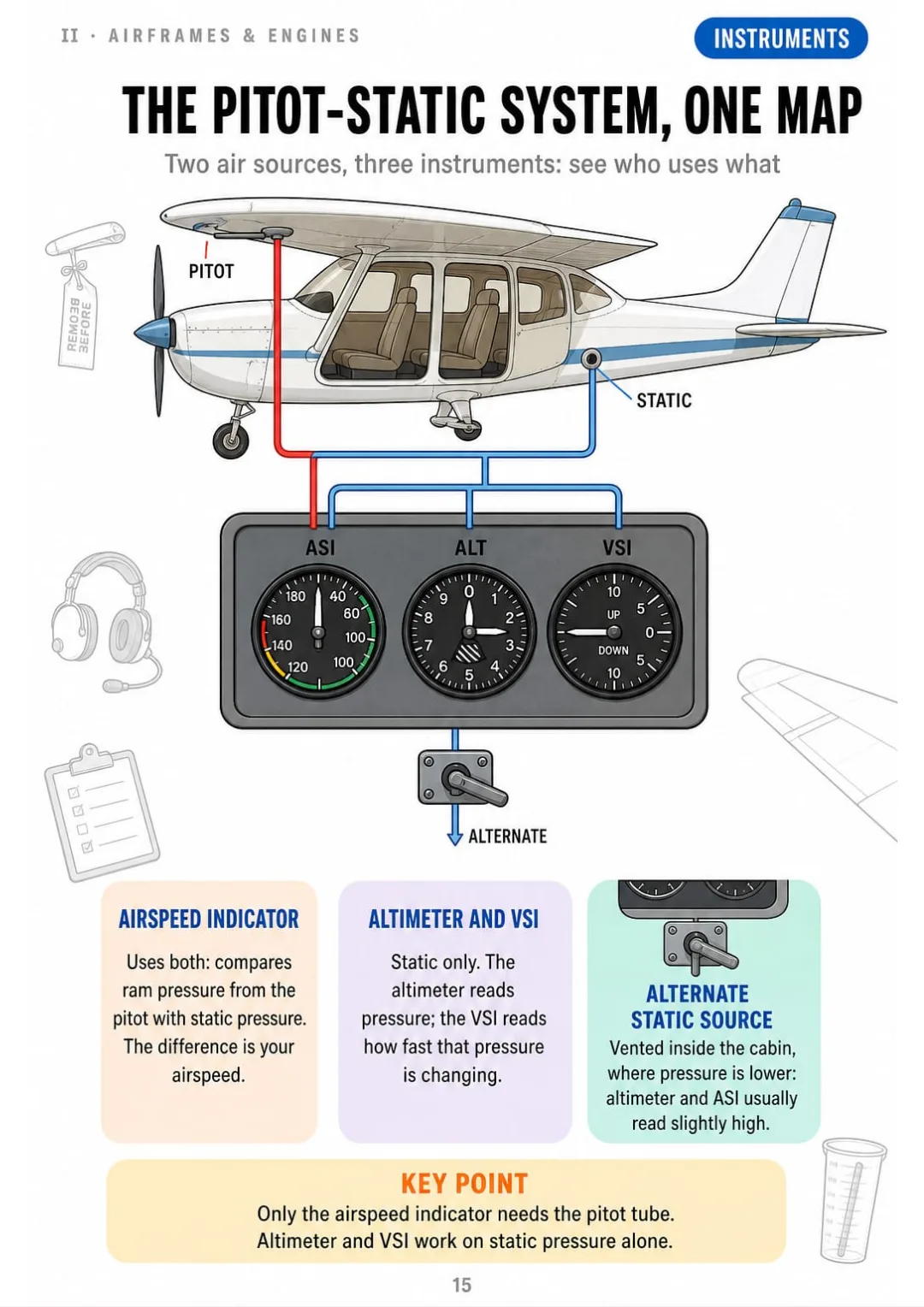
And on the pages next to it, every topic gets its own: the pitot-static system, the four forces, Classes A to G, the standard atmosphere and the PPAER itself.
First you understand why it works that way. Then the calculation sticks on its own.

How an aeroplane flies, airframes and instruments, performance and human factors, the CARs, Canadian airspace, navigation, meteorology and the PPAER exam: 79 pages, all illustrated
Picture this:
Instead of rereading half a page about Canadian airspace without being able to see it...
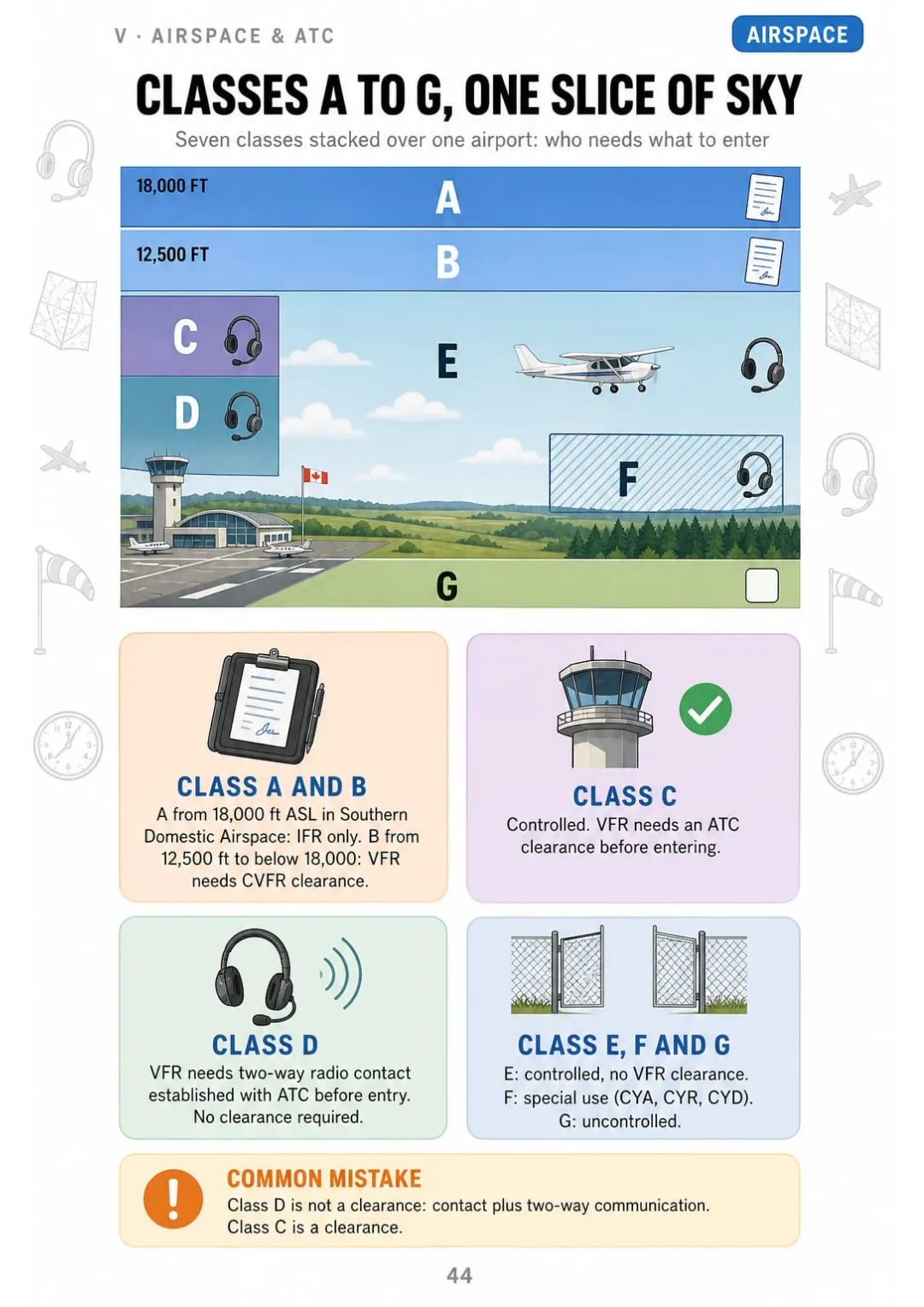
...you open the page and find Classes A to G in one slice of sky, each with its altitudes and what it asks of you: a clearance in Class C, radio contact in Class D.

And VFR minima, the pitot-static system, density altitude, the METAR and the GFA turn into drawings and tables you can read at a glance.
You stop repeating and start understanding.
That's exactly what Private Pilot Canada Made Visual does. It's not “just another manual.” It's 79 illustrated pages in 8 parts, with a review page closing Parts I to VII and, at the end, the PPAER explained: how it works, the frequent mix-ups side by side and an exam day checklist.
Because what your brain sees organized, it remembers.
The four forces, the three axes, angle of attack and the stall, load factor in turns, left-turning tendencies, stability and the C of G, ground effect and wake turbulence.
The pitot-static system as one map, blocked pitot and static, airspeed markings, the altimeter, gyroscopic instruments, compass errors, engine, fuel, mixture and carburetor icing.
Density altitude, takeoff and landing charts, crosswind component, weight and balance, the C of G in 4 steps, hypoxia, fitness to fly and decision-making.
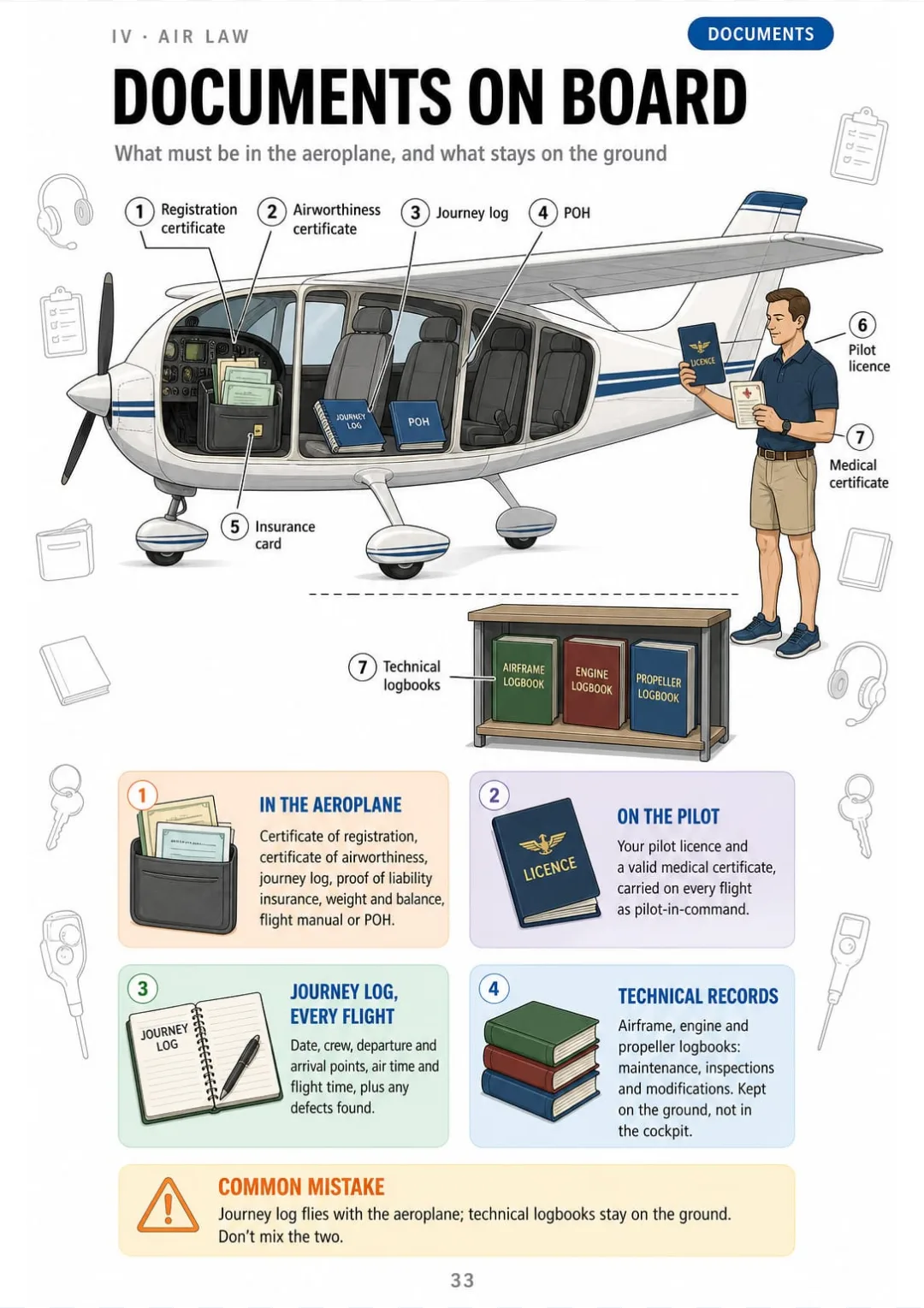
Documents on board, licence privileges and recency, VFR minima in one table, minimum altitudes, right-of-way, fuel, flight plans and itineraries, ELT and reporting to the TSB.
Classes A to G in one cross-section, control zones and TCAs, CYA, CYR and CYD, MF and ATF, joining the circuit, light signals, transponder codes, phraseology and runway markings.
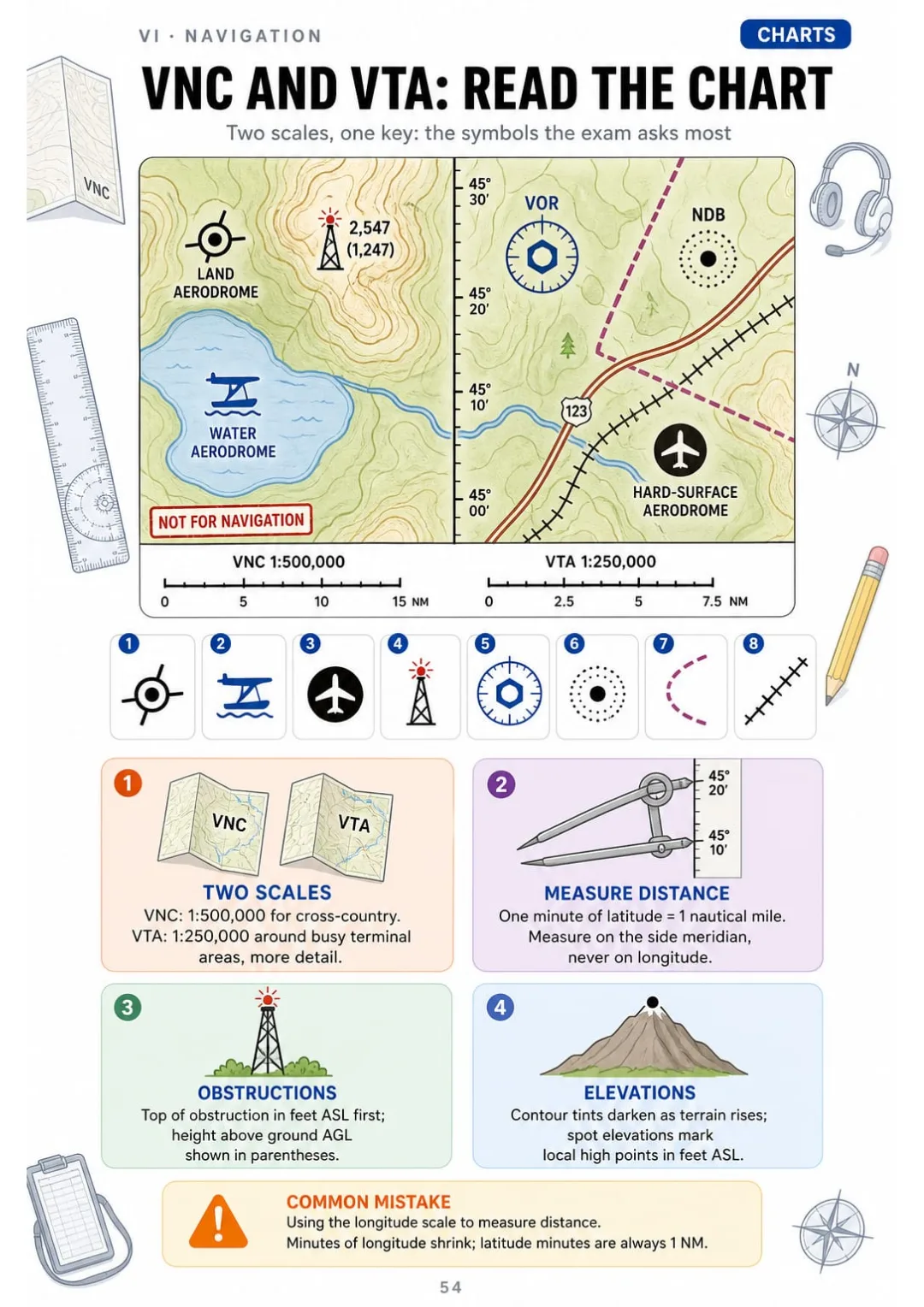
VNC and VTA, the CFS entry, true track to compass heading, time, speed, distance and fuel, the wind triangle, pilotage and diversions, VOR, ADF, GPS and the nav log.
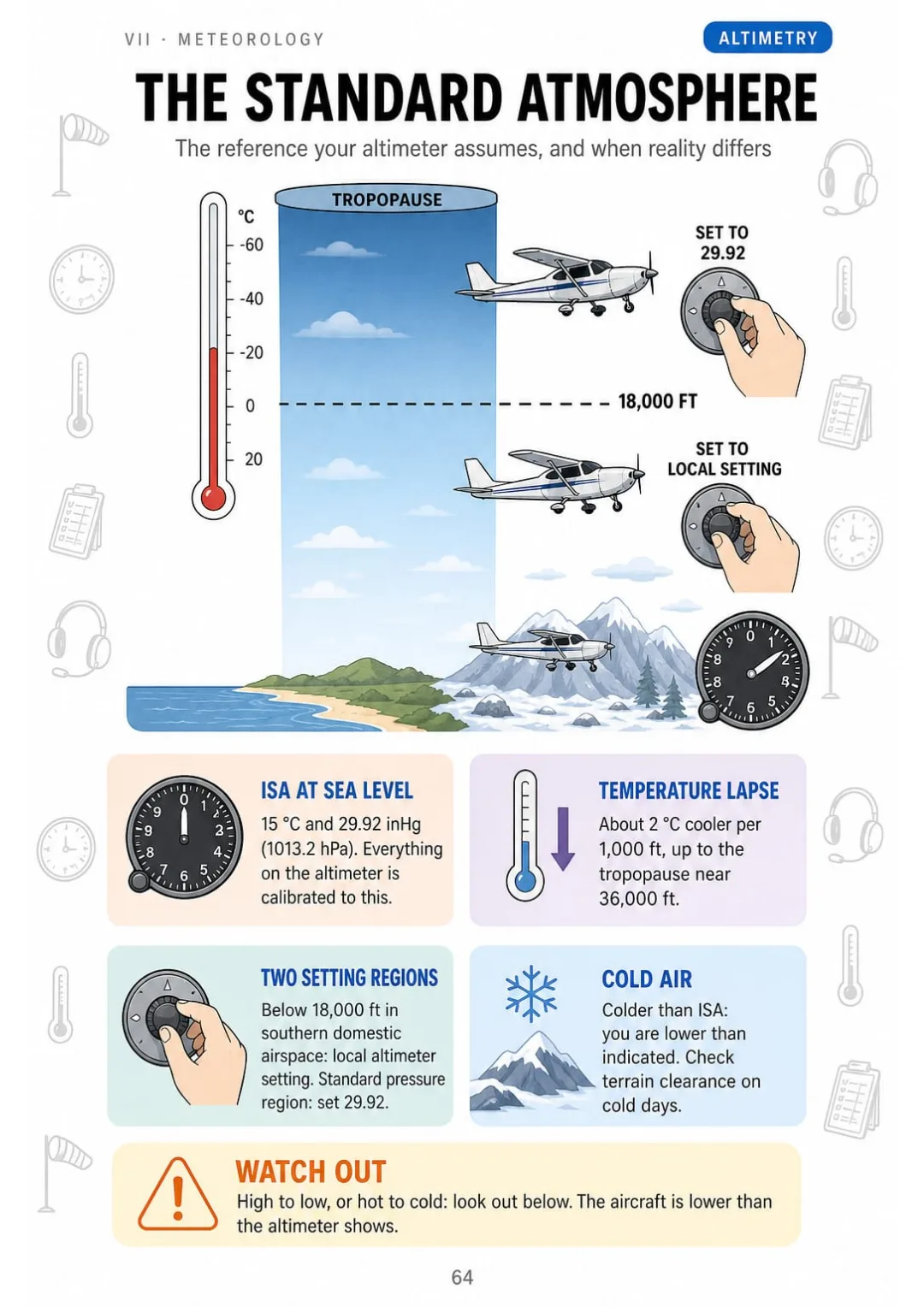
The standard atmosphere, stability and clouds, fronts, thunderstorms, fog and icing, the METAR and TAF in order, both GFA panels, upper winds, AIRMET, SIGMET and PIREP.
How the PPAER works, the frequent mix-ups side by side, the written exam day checklist and what comes next: the flight test and your licence.
At the end of the book: A review page closing Parts I to VII, plus the PPAER explained, with mix-ups side by side and an exam day checklist.
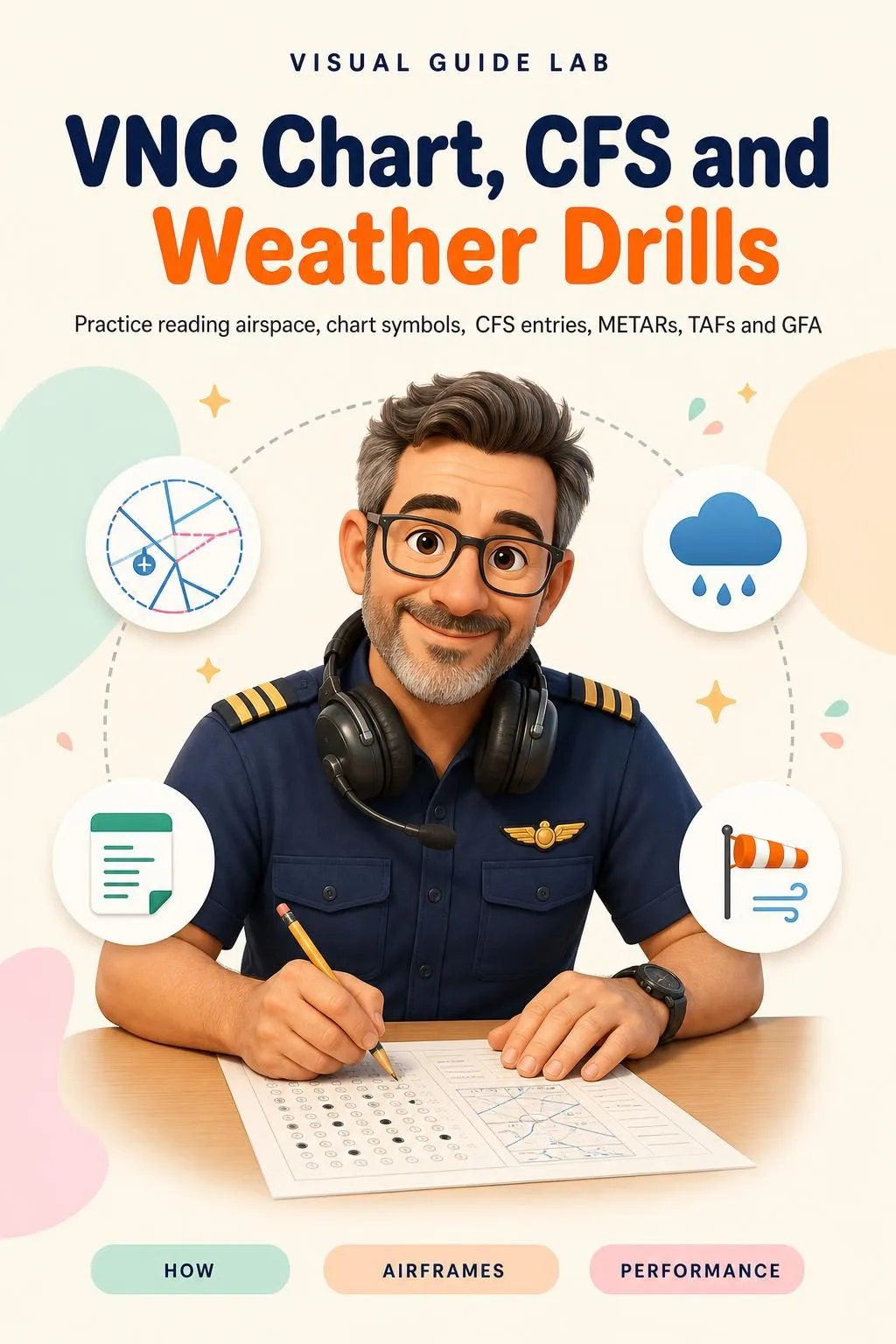

Practice reading airspace, chart symbols, CFS entries, METARs, TAFs and GFA panels on redrawn excerpts (not for navigation), with every answer worked out in the same steps as the book.

The mix-ups students make most often (VFR minima in controlled vs uncontrolled airspace, CYA vs CYR vs CYD, MF vs ATF, true vs magnetic) on quick-review cards, plus what you need on exam day: your instructor's recommendation, ID, medical, booking the exam and what you may bring (check the current Transport Canada list).
📄 This is a digital PDF book sent to your email: nothing is printed or shipped.
PDF by email: Private Pilot Canada Made Visual reaches your inbox as a PDF, and the two free books come by email too. One-time payment, no installments or hidden costs.
Air Law, Navigation, Meteorology and General Knowledge, one topic per page, to review between lessons and weekend flights.
A review page closes Parts I to VII, so you can see which area is weak before exam day. You need 60% in each one.
A quick visual refresher of what you use on every flight: VFR minima, airspace, the METAR, the GFA and weight and balance.
📄 This is a digital PDF book sent to your email: nothing is printed or shipped.
30-day guarantee: tell us what didn't work and we'll refund 100%.
You have 30 days to try Private Pilot Canada Made Visual and the two bonus books. If it doesn't work for you, tell us what didn't work and we'll refund 100% of what you paid. One-time payment, no subscription.
We email Private Pilot Canada Made Visual as a high-resolution PDF to the address you enter at checkout, so you can read it on your phone or tablet or print it. The two bonus books, VNC Chart, CFS and Weather Drills and PPAER Mix-Ups and Exam Day Checklist, also come by email.
A one-time payment of US$27 (US dollars). If your card is in Canadian dollars, your bank converts it at its own rate. No installments and no subscription.
For anyone preparing for the PPAER, Transport Canada's written exam for the Private Pilot Licence – Aeroplane, from your first ground school lesson to your last review. It covers Canadian rules only: if you're training in the US for the FAA Private Pilot Knowledge Test, this book is not for you. Check the table of contents above to see every topic.
Transport Canada's Study and Reference Guide for the PPAER (TP 12880, 6th ed.), the Canadian Aviation Regulations (Parts IV and VI), the TC AIM, the Canada Flight Supplement and NAV CANADA weather products. Canadian sources only, no FAA rules. Charts, CFS entries and weather panels are explanatory redrawings, marked Not for navigation.
No. It's independent study material. It isn't published, approved or endorsed by Transport Canada or NAV CANADA.
No. It's the illustrated review that puts what you're studying in order. It doesn't replace ground school, your textbook or your flight instructor, it doesn't give you a certificate and it doesn't count toward your ground school hours. The human factors pages (hypoxia, fitness to fly) are exam content, not medical advice.
No. The drills and practice questions are written for this book and are not official PPAER questions. They're there to train you.
Yes. You can print the whole book or just the pages you want to keep in your flight bag.
You have 30 days. Tell us what didn't work and we'll refund 100%.
You don't have to reread the same page hoping it sticks this time.
You don't have to memorize rules and systems you can't picture.
And you definitely don't have to walk into the written exam not knowing where to start.
There's an easier way. And it's one click away. Now it's your turn.
One-time payment: CA$ 34.99 · Guarantee: 30 days · PDF by email
YES, I WANT PRIVATE PILOT CANADA MADE VISUAL FOR CA$ 34.99📄 This is a digital PDF book sent to your email: nothing is printed or shipped.